WELCOME..... TO .....HIGH SCHOOL BIOLOGY BLOG !!!

Friday, November 26, 2010

Light Reaction in Photosynthesis

  1. Happens = in photosystem (in thylakoid membrane).
  2. Involved only PSI (In cyclic photophosphorylation)
  3. Energised e-:
    • are released from the excited chlorophyll a (P700)
    • is picked up by a primary acceptor.
    • pass through electron transport chain
    • return to P700
    •  by releasing energy (to produce ATP from ADP and Pi).
  4. 
    Cyclic photophosphorylation
    Involved both PSI and PSII (In non-cyclic photophosphorylation)
  5. Energised e- :
    • are released from the excited chlorophyll a (P680)
    • is picked up by the primary acceptor.
    • are transported to cytochrome complex
    • through the elcetron carrier plastoquinone 
    • during which its energy is trapped to form ATP.
  6. Electron hole:
    • is formed in P680 due to the transport of the excited electron
    • is filled up by the electron produced during photolysis.
  7. Low energy level e-:
    • from the cytochrome complex are transported to P700 through plastocyanin.
    • transportedfrom P700 to NADP for reduction (catalyzed by NADP+ reductase (enzyme)
    • via the primary acceptor and ferredoxin.
  8. Net energy gain (during non-cyclic photophosphorylation) = 1 mol ATP + 1 mol NADPH.
Non-cyclic photophosphorylation

Saturday, November 13, 2010

Photosynthesis

  1. Photosynthesis = process : carbohydrate is synthesised by using sunlight, CO2 and H2O. 
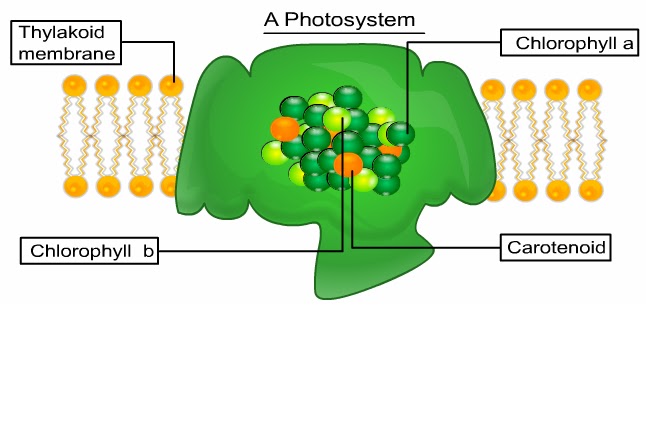
  2. Photosynthesis occurs in the thylakoid membrane of the chloroplast (contains many pigments : chlorophyll a, chlorophyll b and carotenoids.
  3. These pigments are grouped together = photosystems.
  4. Two types of photosystems : photosystem I and photosystem II.
  5. Both photosystems absorb light energy--> convert it into biochemical energy.
 

Wednesday, November 10, 2010

Mural painting by Lower 6 students.


Aiya!...very... very hot la............!

Faster laaa... L6ScZeta...very hot laaa..!
    

Friday, November 5, 2010

Biology STPM 2010

Paper   :  Biology 2 (structure and essay)
Code    : 964/2
Date     : 30 Nov 2010 (Tuesday)
Time     : 2.00 pm - 4.30 pm
Duration: 2 hours 30 mins

Paper   :  Biology 1 (multiple-choice)
Code    : 964/1
Date     : 2 Dec 2010 (Thursday)
Time     : 2.00 pm - 3.45 pm
Duration: 1 hours 45 mins

Biodiversity: Threat of extinction

Factors that threaten the extinction of biodiversity:


2.  logging
7.  pollution.

Biodiversity in Malaysia

Biological diversity (biodiversity) :
total number of species within an ecosystem and to the resulting complexity of interactions among them. (It includes all the range of ecosystems and varieties of plants, animals and micro organisms within them).

Biodiversity can be divided into:
- ecological diversity
- species diversity
- genetic diversity.

Ecological diversity: collection of different environment types in a region. (In Malaysia, ecological diversity includes coastal vegetation, tropical rain forest up to the montane vegetation).

Species diversity: variety of living things on earth. It includes mammal, reptiles, amphibians, birds, insects and invertebrates.

Genetic diversity: variations at the level of individual genes. (These variations are caused by meiosis during sexual reproduction, artificial selection and genetic recombination).

Genetic diversity provides a mechanism for populations to adapt to their ever-changing environment. The more variations, the better the chance that at least some of the individuals will have an allele that is suited for the new environment.

In Malaysia: genetic diversity can be seen in both wild and domesticated animals, plants and insects.